A fire can turn a small fault, a spark, or an unattended cooking appliance into a serious threat to lives, property, and business operations within minutes. In Abu Dhabi, every occupied building, from a small office to a hotel tower, a warehouse, or a restaurant kitchen, should have fire protection that is installed correctly and working when it is needed. A system that is missing, poorly maintained, or unsuitable for the building’s hazards cannot detect a fire early, warn occupants, or help control the spread.
This guide covers what a fire fighting system is, the main types used in buildings, Abu Dhabi requirements, and how to keep them ready for an emergency.
Key Takeaways
- A fire fighting system combines different fire safety equipment and systems designed to detect, control or extinguish fires.
- Common systems include sprinklers, hydrants, fire alarms, gas suppression, foam and chemical suppression systems.
- Fire alarms detect and alert, while suppression systems actively control or extinguish a fire.
- The right system depends on the building type, occupancy, fire risks and applicable requirements.
- Regular inspection, testing and maintenance are essential to keep fire protection equipment ready for an emergency.
- In Abu Dhabi, fire protection systems must meet applicable Civil Defence requirements and relevant NFPA standards.
What is a Fire Fighting System?
A fire fighting system consists of several different types of equipment, components and systems that are aimed at ensuring safety against fire in a building. Depending on the type of dangers associated with the property, the system may include items such as: sprinklers, hydrants, fire pumps, alarms, extinguishers and specialized systems for extinguishing fires.
In Abu Dhabi, one must adhere to certain standards and specifications described in Abu Dhabi Fire and Rescue regulations while designing, installing and testing fire safety systems in buildings.
Types of Fire Fighting Systems
Fire safety risks differ among structures, and that's why it is necessary to use various systems when it comes to fire safety. The most common systems of fighting fire are listed as follows:
- Water-based systems: Water-based systems include automatic sprinklers and fire hydrants, and hose reels as water-based systems are widely used for buildings in which it is appropriate to use water for controlling fire.
- Gas Systems: Gas Systems include clean-agent and CO₂ systems used in areas where water is unsuitable for equipment. Such systems are typically used in server rooms, telecommunications areas, and many other special areas.
- Foam Systems: Foam Systems are designed to address the specific fire risks caused by flammable liquids by creating a layer on the burning item that prevents the fire from spreading and reigniting.
- Dry & Wet Chemical Systems: Chemical suppression systems can be used for particular hazards. For example, commercial kitchens need specific protection for cooking equipment and grease. Our fire suppression systems for kitchens are implemented in areas with high risk.
- Fire Detection & Alarm Systems: A fire alarm system is one of the first signs of fire and alerts the people. The detection and alarm technology is the key to a complete fire safety system.
Key Components of a Fire Fighting System
A complete system can contain several interconnected components. The exact combination depends on the building and its fire risk.
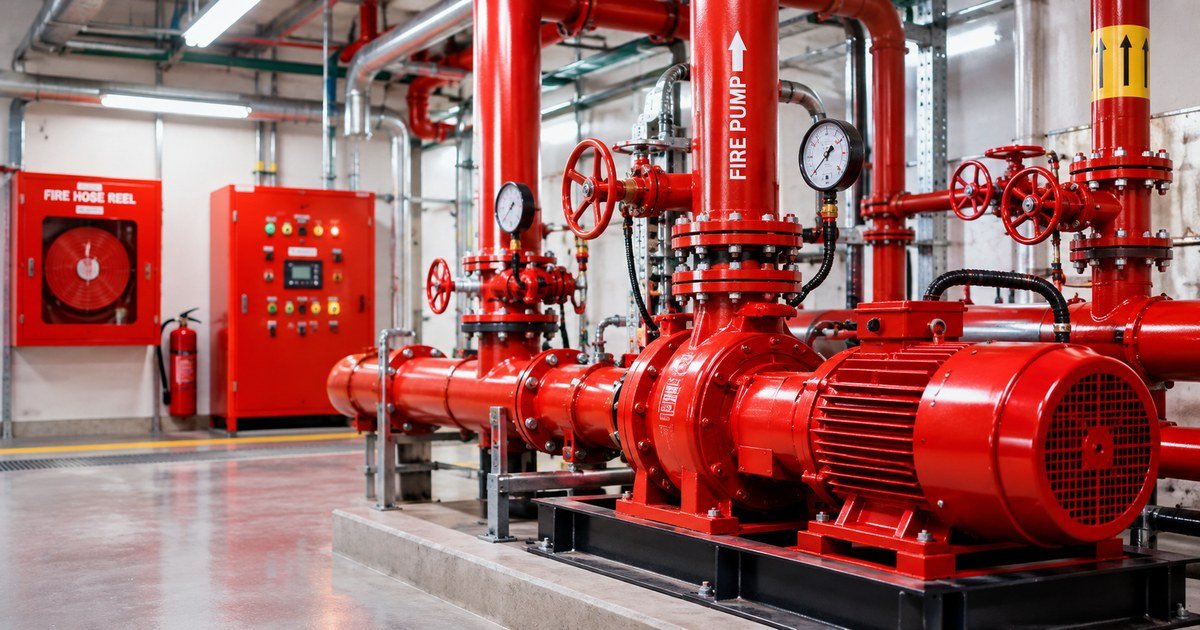
- Fire Pumps: Main, standby and jockey pumps help maintain the required water supply and pressure for water-based fire protection systems.
- Control Panels: Fire alarm control panels receive signals from connected detection devices and manage alarm functions.
- Piping & Nozzles: Pipes distribute water or other suppression agents to the areas requiring protection, while nozzles or sprinkler heads discharge the agent.
- Fire Alarms: Conventional, addressable and wireless systems can provide detection and warning according to the requirements of the installation.
- Fire Extinguishers: Portable extinguishers provide a first response to small fires when used correctly and safely.
- Emergency Lighting & Exit Signs: These help occupants identify escape routes when normal lighting is unavailable.
Water tanks, valves, hose reels and hydrant connections can also form part of a building's fire protection infrastructure.
Fire Extinguisher Classes
Fire extinguishers are selected according to the type of material that is burning. Common fire classifications include:
| Class | Fire Type | Common Fuels | Best Extinguisher |
|---|---|---|---|
| A | Ordinary combustibles | Wood, paper, cloth, rubber, textiles | Water-based or multipurpose |
| B | Flammable liquids and gases | Gasoline (petrol), oil, grease, propane, certain solvents | CO2 or dry chemical |
| C | Electrical fires | Live electrical equipment | Non-conductive agents (CO2 or dry chemical) |
| D | Combustible metals | Magnesium, titanium, sodium | Dry powder agents (specialised) |
| K | Kitchen fires | Cooking oils and fats, particularly in commercial kitchens | Wet chemical |
The correct extinguisher must always be selected for the specific hazard. Using an unsuitable extinguishing agent can be ineffective and, in some situations, dangerous.
How Does a Fire Fighting System Work?
- Detection: Detectors or other initiating devices identify signs of a fire, such as smoke or excessive heat.
- Alert: The fire alarm system provides an audible, visual or other warning so occupants and responsible personnel can respond.
- Suppression: Sprinklers, hydrants, extinguishers or specialised suppression systems help control or extinguish the fire, depending on the hazard.
- Evacuation: Emergency lighting, exit signs and evacuation arrangements help occupants leave the building safely.
Fire Fighting System vs Fire Alarm vs Fire Suppression
These terms are often used interchangeably, but they describe different parts of fire protection.
Fire Fighting System is the broader term covering the different equipment and systems used for fire detection, warning, control and extinguishing.
Fire Alarm System focuses primarily on detecting a fire or fire-related condition and alerting people to the danger.
Fire Suppression System refers to an active mechanism used to control or extinguish a fire, such as water, gas, foam or chemical suppression.
In practice, these systems are designed to work together rather than operate as completely separate solutions.
Who Needs a Fire Fighting System?
Fire protection requirements vary according to the building's size, occupancy, layout and hazards. Fire protection systems are commonly required or used across:
- Commercial buildings & offices: Offices need suitable detection, alarm and fire protection arrangements to protect employees, visitors, equipment and premises.
- Warehouses & industrial facilities: Storage and industrial environments can contain combustible materials, machinery, chemicals or other specialised hazards requiring carefully designed protection.
- Hospitals & healthcare facilities: Fire protection is particularly important where occupants may have limited mobility or require assistance during evacuation.
- Hotels & residential towers: Multi-storey properties need coordinated detection, alarm, fire fighting and life safety systems to protect large numbers of occupants.
- Kitchens & restaurants: Cooking equipment, oils and grease create specific fire hazards, making dedicated kitchen fire suppression particularly important.
Why Are Fire Fighting Systems Important?
A properly designed fire protection system does more than meet a regulatory requirement. It supports four important objectives:
- Safety of Life: The ability to detect, alarm and extinguish fire at the right time can provide the people an invaluable opportunity to evacuate.
- Preservation of Property: Fire sprinklers and extinguishing systems enable controlling fire spreading.
- Compliance with Regulations: Fire fighting devices permit proprietors to comply with the law of Abu Dhabi Civil Defence.
- Continuity of Business: A fire can cause a halt to operations and put the people in danger.
Fire Fighting System Standards in Abu Dhabi
The fire safety systems in Abu Dhabi ought to be designed and kept in operation in conformity with the provisions of the Abu Dhabi Civil Defence, and with relevant NFPA regulations.
For instance, NFPA 13 deals with the building, installation and approval process of sprinkler systems, while NFPA 72 deals with the requirement of fire alarm and signalling systems. NFPA 96 regulates ventilation and fire safety in commercial kitchens.
The applicable requirements depend on the building, occupancy, hazards and system being installed. Projects should therefore be assessed by qualified professionals and coordinated with the relevant authority requirements.
Where Civil Defence approval and certification are applicable, building owners should use appropriately approved and qualified fire safety contractors for installation and maintenance.
Maintaining Your Fire Fighting System (AMC)
Installing a fire fighting system is only the beginning. A system that is not inspected, tested and maintained properly may not perform as expected when an emergency occurs.
An Annual Maintenance Contract (AMC) provides a planned approach to keeping fire protection equipment operational. Depending on the system and scope, maintenance can include scheduled inspections, functional testing, fault identification, repairs and maintenance records.
Proper documentation is also important when systems need to be reviewed for Civil Defence compliance or renewal requirements.
Adhoc Safety provides Fire Fighting AMC / Annual Maintenance Contract services covering fire fighting and fire safety systems. With planned maintenance and emergency support, an AMC helps building owners and facility managers keep critical protection equipment ready for use.
Frequently asked questions
What is a fire fighting system?
A fire fighting system is a combination of equipment and systems designed to detect, control or extinguish fires and support safe response and evacuation.
What are the main types of fire fighting systems?
Common types include water-based, gas-based, foam-based, dry and wet chemical systems, along with fire detection and alarm systems.
What is the difference between a fire alarm and a fire fighting system?
A fire alarm system primarily detects and alerts people to a fire. A fire fighting system is a broader term covering equipment and systems used for detection, warning, control and extinguishing.
How often should fire extinguishers be inspected?
The fire extinguishers must be inspected and maintained per the relevant standards, manufacturer’s instructions and the situation of the installation. Regular professional inspections help detect damages and pressure problems.
Are firefighting systems required in Abu Dhabi?
Fire safety requirements are determined by the kind of building, its use, purposes and regulations. The owner of the building has to obtain the relevant approvals and ensure that his systems comply with the standards provided by Abu Dhabi Civil Defense.
Who can install a fire fighting system in Abu Dhabi?
Fire fighting systems should be designed, installed, tested and maintained by appropriately qualified and Civil Defence-approved contractors where approval is required. This helps ensure the installation is properly coordinated, tested and documented.